
There are two numbers almost every contractor knows by heart: last month’s sales and next month’s backlog. Ask how much profit they actually made, though, and the conversation often gets a little quieter. Some don’t know. Some have an idea. Others probably know the answer but would rather not say it out loud.
After spending more than two decades in this industry—as a contractor, in distribution, and now through nearly 200 conversations on the HVAC R&D Podcast—I’ve realized we spend an awful lot of time talking about sales and almost no time talking about what those sales are actually producing. Somewhere along the way, many of us started believing those two numbers automatically move together.
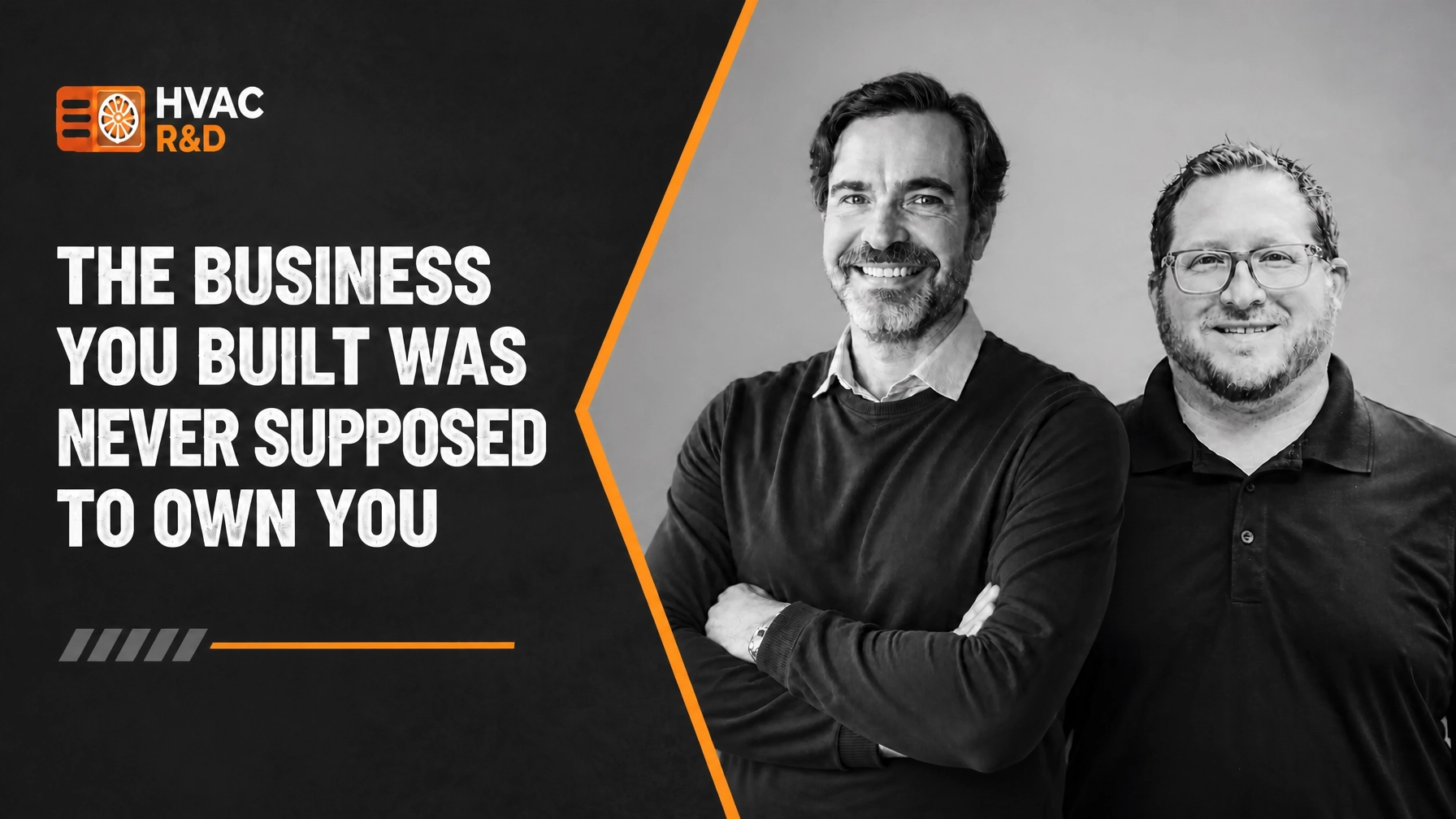
During my conversation on Episode 191 of the HVAC R&D Podcast with Ben Hansen, better known as the Profit Doctor, he challenged that belief almost immediately.
“The big lie is that more revenue fixes everything.”
That one sentence hit me harder than I expected because I’ve heard versions of it my entire career. As a territory manager, business development manager, and now an account executive, I honestly couldn’t tell you how many times I’ve heard someone confidently declare, “Sales cures all!” Every time I heard it, I found myself wanting to answer the same way.
No. No, it doesn’t.
When business slows down, we chase more sales. When overhead starts climbing, we chase more sales. When cash flow gets tight, we chase more sales. Even when things are going well, we convince ourselves that another truck, another technician, another territory, or another record-breaking month will somehow solve every problem waiting around the corner. Sometimes growth absolutely is the answer, but growth isn’t a cure if the foundation underneath it is already cracked.
Profititis: When Growth Hides the Real Problem
Ben has a name for that condition.
Profititis.
Healthy revenue. Sick profitability.
At first, it sounds like an accounting problem, but the longer we talked, the more I realized it really isn’t about accounting at all. It’s about identity.
Most contractors don’t wake up one morning dreaming of becoming CEOs. They become business owners because they’re exceptional technicians, installers, salespeople, or project managers. Someone eventually tells them, “You’re so good at this, you should go into business for yourself.” Or maybe they’re simply tired of working for “the man.” So they take the leap.
What nobody hands them is the roadmap for everything that comes next.
Suddenly, the person who spent years mastering airflow, refrigeration circuits, combustion analysis, or load calculations is expected to understand financial statements, hiring, marketing, payroll taxes, pricing strategy, labor burden, forecasting, and leadership. They’re no longer judged by how well they fix HVAC systems in the field. They’re judged by how well they build an organization. Those are two completely different skill sets, and somewhere between technician and CEO, a lot of owners discover they’ve accepted a job they were never trained to do.
That’s why one of Ben’s observations became, for me, the emotional center of the entire conversation.
“Most business owners are wired toward making sure the customer is getting great value, making sure the team is really taken care of… and often, the person who’s on the short end of the stick is themselves.”
I’ve met those owners my entire career. They’re the first ones to skip a paycheck if cash gets tight. They’ll make sure every technician gets paid before they pay themselves. They’ll stay late solving problems, answer customer calls during dinner, and spend weekends catching up on paperwork because there simply wasn’t enough time during the week.
Hell, I grew up watching one.
My father, “Cajun Joe,” is still one of the most gifted technicians I’ve ever known. Once I got old enough to understand what was actually happening behind the scenes, I realized the real work didn’t end when the last service call was finished. There were suppliers to pay, payroll to cover, customers to take care of, and a business demanding just as much attention as the equipment itself. At times, he still fights many of those same battles today.
Maybe that’s where we’ve gotten it wrong. Somewhere along the way, we started confusing sacrifice with success. We convinced ourselves that if we’re exhausted enough, stressed enough, or working enough hours, we’re proving how committed we are.
But what if the very business we built to create freedom has quietly become the thing stealing it?
One of my favorite moments in the interview came when Ben described contractors as “taping $100 bills to every order.”
I laughed because the image is ridiculous.
The reality isn’t.
We’ve all seen it. We discount jobs because we’re afraid to lose them. We keep offering services we’re mediocre at because saying no feels like leaving money on the table. We chase projects outside our sweet spot just to keep everyone busy and convince ourselves that moving trucks automatically means a healthy company.
Ben’s point was simple.
If every new sale loses money, more sales don’t solve the problem.
They multiply it.
That’s why I appreciated that Ben never told anyone to work harder. He never told owners to find more leads, hire another salesperson, or outwork the competition. Instead, he challenged every owner listening to do something that sounds almost too simple.
“You need to dedicate specific time to working on profitability. Firefighting and getting more customers is usually not the path to improving profitability the fastest.”
I don’t think that’s really financial advice.
I think it’s permission.
Permission to stop reacting long enough to actually lead.
Permission to open the books instead of avoiding them.
Permission to admit that being busy isn’t the same thing as building a healthy business.
And maybe, most importantly, permission to realize that becoming a CEO requires learning an entirely different set of skills than becoming a great technician ever did.
Reclaiming the Dream
Toward the end of our conversation, Ben talked about reclaiming the dream, and that phrase stayed with me long after we stopped recording. Then he explained what that dream actually was.
“That is not the dream that convinced the most effective technician or best salesperson to start their own thing. It was freedom. The opportunity to have financial success for themselves and their family. Being able to chart their own course and have control over their destiny.”
When he said that, I realized he wasn’t talking about building bigger companies. He was talking about remembering why almost every contractor starts a business in the first place. Nobody dreams about cash flow problems, supplier debt, or lying awake wondering how payroll is going to clear on Friday. They dream about freedom, providing for their families, building something meaningful, and having the opportunity to control their own future. Somewhere along the way, too many owners accidentally trade one boss for another—except this one wears their own last name.
Ben called it reclaiming the dream. I couldn’t help but think about another dream we’ve all heard about our entire lives—the American Dream.
One of the greatest things about living in the United States and working in the skilled trades is that the American Dream is still within reach for anyone willing to chase it. I’ve always believed that’s one of the greatest privileges we have as tradespeople and entrepreneurs, and it’s been one of the greatest honors of my career in distribution to help contractors pursue that dream—not simply by selling equipment, but by helping them build healthier businesses.
I didn’t move into distribution because I wanted to become an order taker. I moved into outside sales because I wanted to become a resource. Someone my customers could call when they needed more than a price or an invoice. Someone they could bounce ideas off of, talk through challenges with, or simply ask, “What would you do?” Sometimes I had an answer. More often, I knew where we could find one together. Helping someone find the right resource, make a difficult decision, or simply think about a problem differently has always been more rewarding to me than any purchase order ever could.
As I reflected on this conversation, I found myself thinking back to dozens of conversations I’ve had over the years with contractors sitting in their offices, leaning against a warehouse counter, or talking through challenges on a jobsite. I certainly haven’t solved all of their problems, and I never will. But if I could help someone see a different path, connect them with the right person, point them toward the right education, or simply remind them they weren’t carrying the weight of their business alone, then I’d done my job. Somewhere along the way, many of those customers became friends, and that’s always meant far more to me than the sale itself.
Maybe that’s what this conversation was really about.
Not profit.
Not pricing.
Not financial statements.
It was about remembering why you started in the first place and becoming the kind of leader your business now needs you to be.
Somewhere along the way, we’ve started measuring success by the revenue our businesses produce instead of the freedom they create. Ben reminded me those aren’t always the same thing. The goal was never to build a company that demanded every ounce of who you are. It was to build one that creates opportunities—for your family, your employees, your customers, and yes, for yourself.
When that transformation finally happens, profit stops being just another line on a P&L statement. It becomes evidence that you’ve built something healthy. A business that serves its owner instead of consuming them. A business that creates opportunity instead of anxiety. A business that finally delivers the dream that convinced you to take the leap in the first place.
Ramblin’ Rhyno, Out.
Peace Y’all.
Thursday Reflections are where I take my thoughts and ideas from a prior week’s HVAC R&D Podcast episode and explore the bigger lesson behind the conversation.
