EP 175 | Why Your Story Matters: Navigating State HVAC Policy with Todd Titus of HARDI
![[HERO] EP 175 | Why Your Story Matters: Navigating State HVAC Policy with Todd Titus of HARDI](https://cdn.marblism.com/bveerX3apZ9.webp)
Episode Details
Podcast: HVAC R&D
Episode: 175
Guest: Todd Titus, Director of State Government Affairs at HARDI
Location: AHR Expo, Las Vegas – Day 2
Watch/Listen: YouTube Link
Walking the floor at the AHR Expo is always a bit of a sensory overload. You’ve got thousands of people, the hum of heavy machinery, and more shiny new tools than a guy knows what to do with. But amidst all the tech and the handshakes, there’s a conversation happening that most of us usually ignore until it’s too late.
I’m talking about the stuff that happens in state capitals.
It isn’t sexy. It doesn’t involve a new vacuum pump or a high-efficiency heat pump. But the reality is, the guys writing the laws in rooms far away from a job site have more impact on your daily grind than almost any tool in your bag.
On Day 2 of the expo, I sat down with Todd Titus. Todd is the Director of State Government Affairs for HARDI. If you aren’t familiar with HARDI, it’s an association that represents HVACR distributors and manufacturers. Todd’s job is basically to be the early warning system for our industry. He’s the guy standing on the watchtower looking at what’s coming over the horizon, and let me tell you, there is a lot coming.
The 400-Front War
One thing Todd said that really stuck with me was the sheer scale of what he’s tracking. Right now, HARDI is monitoring about 400 pieces of legislation across all 50 states.
Think about that for a second.
Four hundred different attempts to change how we do business, what refrigerants we can use, how we train our people, and what kind of equipment we can install. While we’re out here focusing on the work, there’s a massive legislative machine churning in the background.
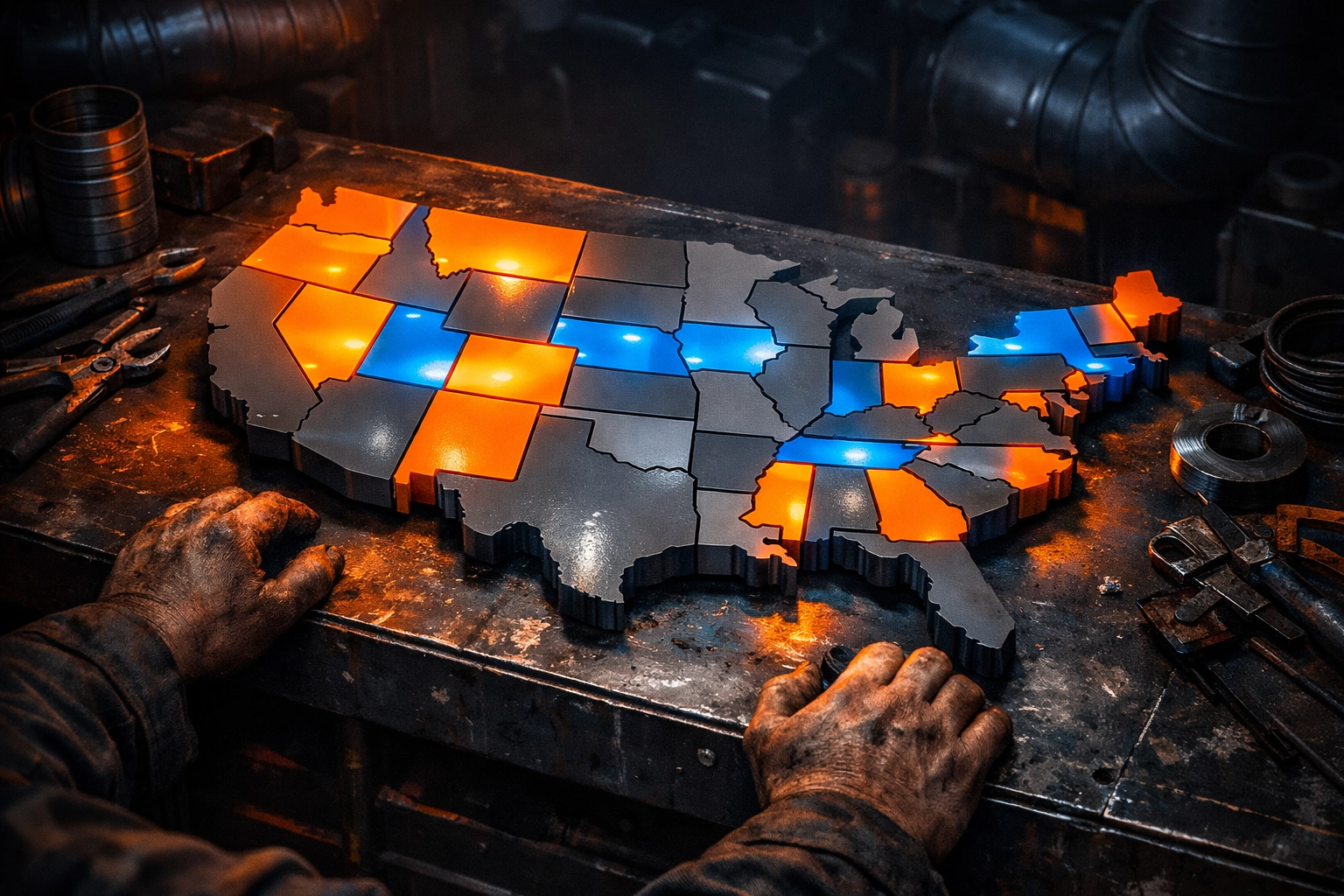
For a long time, our industry focused mostly on Washington D.C. If you handled the federal side, the rest would trickle down. But the game has changed. Now, the real “Battle for the States” is where the action is. When the federal government moves slowly, the states start sprinting. And when states start sprinting in different directions, we end up with what Todd calls the “Patchwork Problem.”
The California Copy-Paste
We’ve all seen it happen. California passes a massive environmental regulation, and before the ink is even dry, five other states are looking at it saying, “Hey, can I copy your homework?”
This creates a nightmare for everyone in the ecosystem.
From the manufacturer side, it’s impossible to build equipment that meets 50 different sets of rules. From the distributor side, you’re trying to manage inventory for a “patchwork” of regulations that change the moment you cross a state line. And for the Trade Crew? It means you’re the ones who have to explain to a frustrated homeowner why they can’t get the unit they want or why the price just skyrocketed because of a mandate passed three states away.
Todd pointed out that a lot of these legislators aren’t “bad guys.” They just don’t know what they don’t know. They’re trying to solve problems without understanding the mechanical realities of what we do. That’s where the “friction” comes in. We often think of friction as a bad thing in a system, it slows things down, creates heat, and causes wear. But in the world of policy, friction makes great solutions.
When we push back, when we provide the “friction” of real-world experience, we force those legislators to come up with better, more practical solutions. Without that friction, they just slide right into passing laws that look good on paper but fail miserably in the field.
The Chemistry Class Nobody Signed Up For
One of the biggest topics Todd and I dove into was the transition to ultra-low GWP (Global Warming Potential) refrigerants. This isn’t just a “green” conversation; it’s a safety conversation.
We’re moving into a world where the alternatives to traditional refrigerants bring a whole new set of risks. Todd broke down the “Big Three” that are being pushed at the state level:
- CO2 (R-744): High pressure. We’re talking pressures that can be incredibly dangerous if you aren’t trained for them.
- Propane (R-290): It’s odorless and highly flammable. You can’t smell a leak, and if it hits an ignition source, the day gets very bad, very fast.
- Ammonia (R-717): It’s toxic. Plain and simple.
When legislators push for these transitions on an accelerated timeline, they often forget about the people who actually have to put their hands on the equipment. If the Trade Crew isn’t trained and the equipment isn’t ready, we are putting lives at risk for the sake of a spreadsheet goal. This is why having someone like Todd in the room matters. He’s telling them, “Hey, you can’t just mandate a move to propane in residential split systems without considering the safety of the technician in the crawlspace.”
The New York Lawsuit: A Line in the Sand
We also talked about the situation in New York. HARDI, along with other industry partners, had to step up and file a lawsuit regarding the state’s transition plan.
Nobody likes a lawsuit. It’s expensive, it’s slow, and it’s a headache. But sometimes, you have to stand your ground. New York was attempting to push a transition that didn’t align with federal timelines and didn’t account for the availability of equipment.
This is the perfect example of why collaboration over competition is so important. In that lawsuit, you had distributors, manufacturers, and trade groups all pulling in the same direction. We might compete for customers during the day, but when the very foundation of our industry is being threatened by bad policy, we have to stand together.
The Rhino doesn’t move alone when the storm hits; the crash stays together. We have to do the same.
Your Voice is the Most Powerful Tool in the Truck
Here is the part where most guys tune out, but it’s the most important: Todd can’t do this alone.
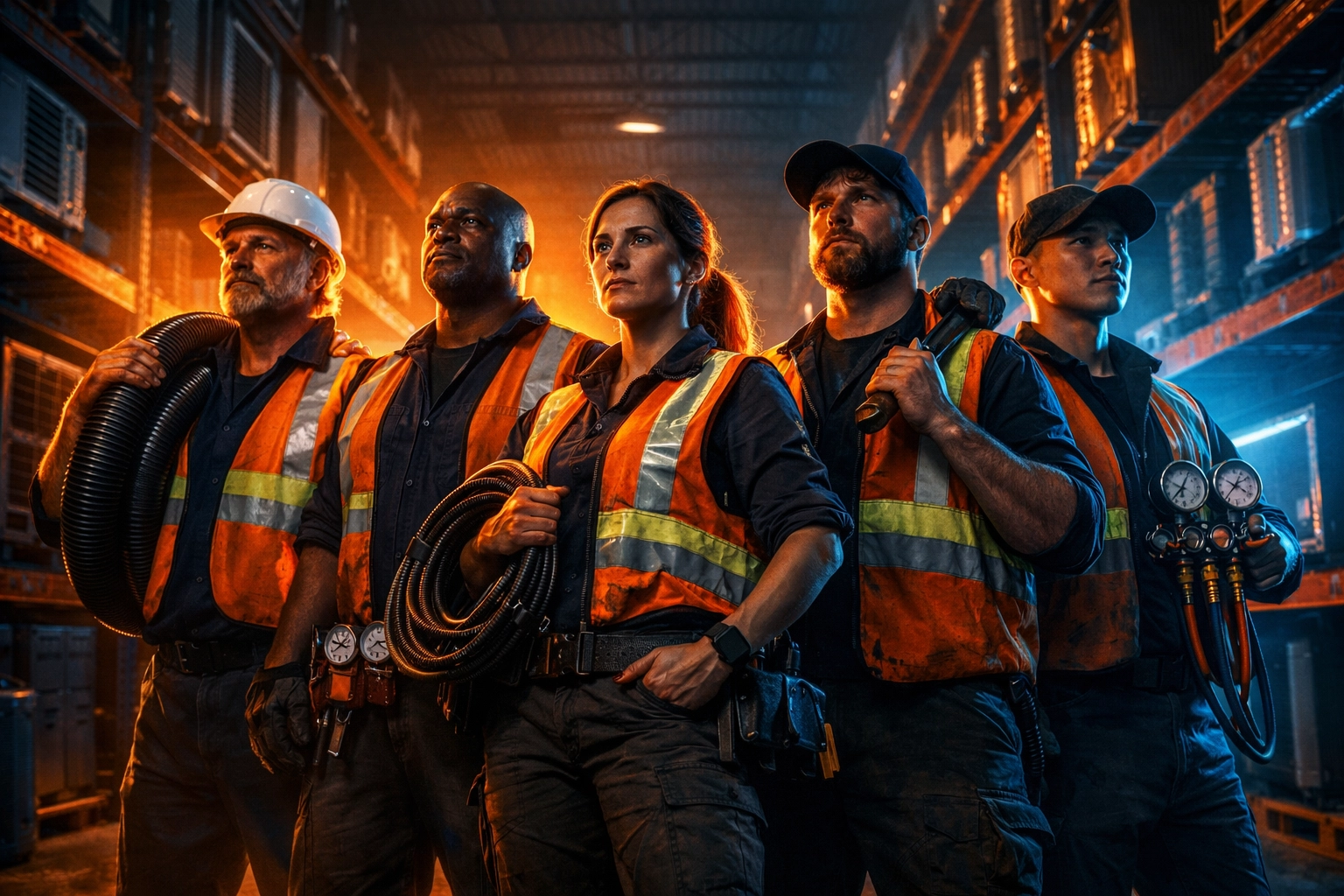
He told me that when he goes into a state capital, he’s just a “lobbyist” to those politicians. But when a contractor from that politician’s home district calls up and says, “Look, this bill is going to put three of my guys out of work and make it impossible for me to service my elderly customers,” the politician listens.
You are a constituent. You are a taxpayer. You are an employer. Your voice has weight that a professional advocate’s voice simply doesn’t have.
Todd mentioned the HARDI Grassroots Advocacy Center. It’s a tool designed to make it incredibly easy for you to speak up. You don’t have to be a policy expert. You just have to be willing to share your story.
We spend so much time talking about “holding the line” on a job site: making sure the brazing is perfect, the charge is right, and the customer is happy. We need to start “holding the line” in our state capitals, too.
Bridging the Gap
At HVAC R&D, our whole mission is to be the connector. We want to bridge the gap between the manufacturer, the distributor, and the contractor. That’s why we built the Vendor Hub. It’s a place where you can find the people and the products that are actually moving the needle in this industry.
But staying connected also means staying informed.
The transition we’re going through right now: the A2L shift, the electrification push, the state-level mandates: it’s the biggest change our industry has seen in 30 years. You can either let it happen to you, or you can be a part of the conversation.
Todd and the team at HARDI are doing the heavy lifting, but they need the Trade Crew to back them up. If you see a piece of legislation in your state that looks like it was written by someone who has never seen a heat pump, don’t just complain about it in the supply house parking lot. Do something.
Final Thoughts from the Windshield
As I was driving away from Las Vegas, thinking about my conversation with Todd, it really hit me. Our industry is built on relationships and reputation just as much now as it has ever been, despite what many will tell you. We trust the guys we work with, and we stand by our work.
Policy is just an extension of that.
If we want a future where the trades are respected and the regulations are sensible, we have to show up. We have to bring that “friction” to the table to ensure we get great solutions.
Collaboration over competition.
Trade Crew strong.
And always, always speak up.
If you want to hear the full breakdown of the New York lawsuit or the specific safety concerns Todd has about the new refrigerant push, go check out the full episode on our Latest Episodes page.
Stay safe out there, and keep the air moving.
Trust.
Voice.
Action.
In this industry, your reputation travels fast: but your silence travels even faster. Don’t let the future of your business be decided by people who don’t know your name.
Ramblin’ Rhyno, out. PeaceY’all.
Want to keep the conversation going?
Check out our latest episode of the HVAC R&D Podcast or check out the resources in the HVAC R&D Vendor Hub and remember that you’re part of something bigger.