Every once in a while, a podcast conversation reminds me why HVAC R&D exists in the first place.
Actually… that’s a lie.
Lately, it feels like almost every conversation does. Every guest, every story, and every lesson seems to fuel another idea, another connection, or another reason to make this platform better than it was the week before. That’s the beauty of sitting down with people who genuinely care about this industry. You rarely walk away with just another episode. You walk away seeing something a little differently than you did before.
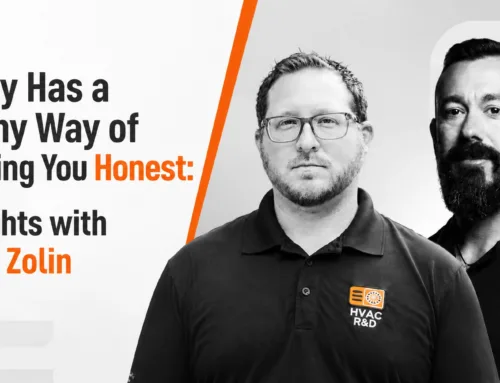
That was certainly the case after my conversation with my friend James Hatfield.
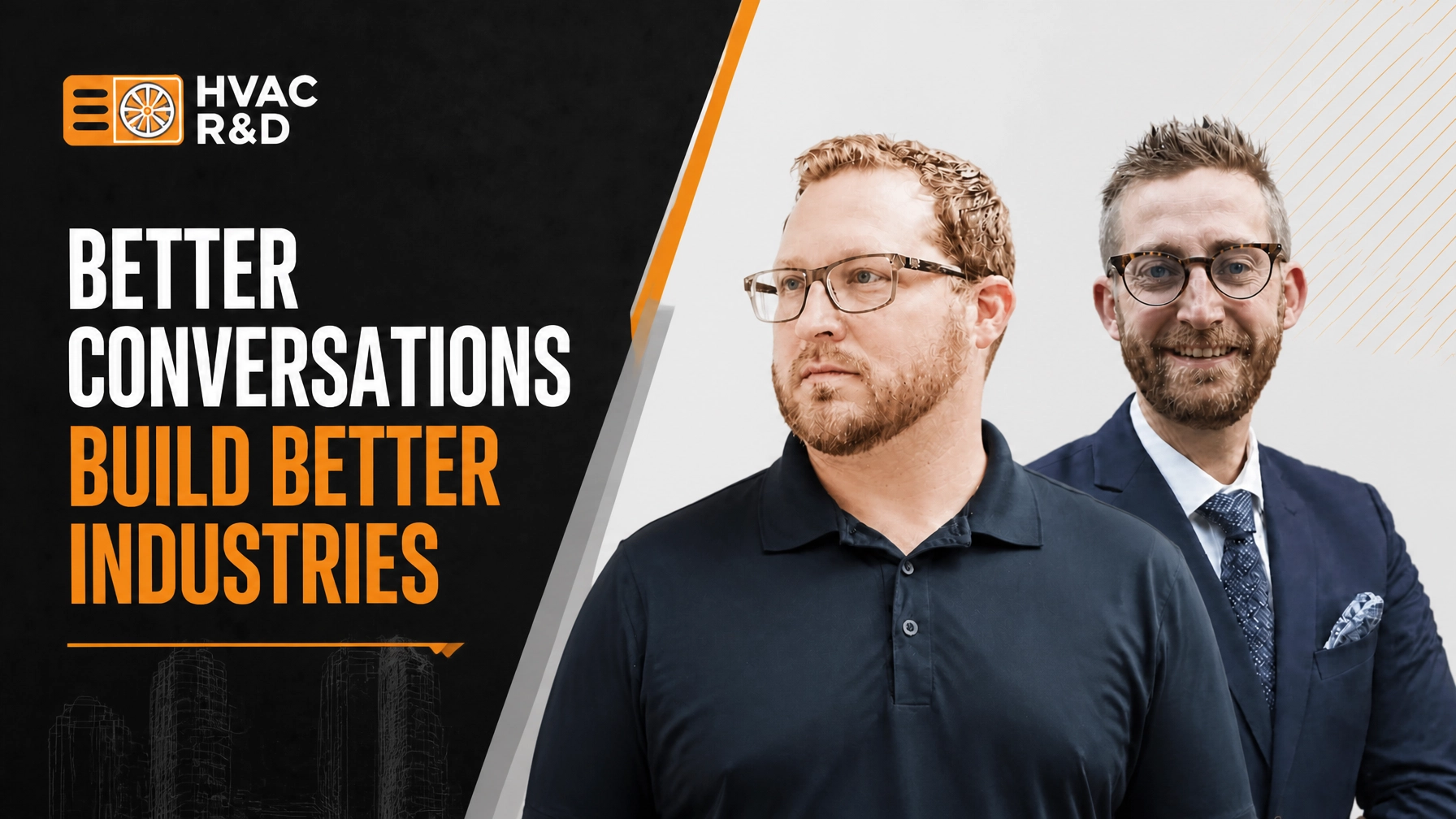
When the HVAC R&D Podcast started, the goal was never simply to put another microphone in front of another guest. It was to create better conversations across an industry that too often works in silos. Contractors, distributors, manufacturers, educators, technicians, and business owners all bring different perspectives to the same challenges, but too often those conversations don’t happen until something has already gone wrong. I’ve always believed that when we understand each other better, we solve problems better.
On the surface, James and I talked about artificial intelligence, video communication, and how platforms from companies like his, LiveSwitch, where he is the CRO are helping shape the future of the skilled trades. But the more I reflected on our conversation afterward, the more I realized those topics were never really the point. They were simply the vehicle for a much bigger discussion about people and how the right technology should strengthen human relationships instead of replacing them.
There is no shortage of discussion today about what technology might eventually replace. Listening to James, I never got the impression he was interested in removing people from the equation. If anything, his vision was exactly the opposite. The philosophy behind what he’s helping build isn’t about replacing human interaction. It’s about helping the right people connect sooner, communicate more clearly, and solve problems together faster. Technology isn’t the destination. It’s simply the bridge.
One of my favorite moments came when James and I were discussing his background in the trades and how he described the early days of growing his painting business, realizing that sitting across from his accountant felt like listening to someone speak a completely different language.
“They’d speak English and I’m like, I don’t understand a word coming out of your mouth.”
I laughed because I think just about every contractor who’s experienced growth has lived through some version of that story. We spend years learning our trade, becoming fluent in airflow, refrigeration, combustion, controls, or water management, only to discover that building a successful business means learning the languages of finance, leadership, marketing, hiring, technology, legal, and operations right alongside the trade we thought we had already mastered.
Nobody hands you a roadmap for that transition. Growth demands more than technical expertise. It demands the humility to become a student all over again.
As the conversation continued, James shared a phrase that once again I haven’t been able to get out of my head. If you listened to Episode 178 with Cory Byron, you’ve heard it before.
“Race to the Face.”
Cory and I both got it from the same sources and the first time you hear it, it sounds like another catchy business phrase about responding faster to customers. The more I sat with it, the more I realized it has very little to do with speed. It’s about shortening the distance between introduction and understanding.
The sooner we can see another person, hear their concerns, and understand what they’re experiencing, the sooner we stop looking at tickets, invoices, or account numbers and start seeing people again.
That’s something our industry can lose sight of. It’s easy for a homeowner to become another service call. It’s easy for a technician to become Truck 17. It’s easy for a contractor to become another account, or for a manufacturer to become another vendor. Every role eventually becomes a label if we’re not intentional about remembering there’s still a person behind it.
That’s where James’ philosophy resonated with me because I’ve come to believe that many of the biggest challenges we face in this industry aren’t technical problems at all—they’re communication problems. A homeowner struggles to describe what’s happening. A technician can’t easily show what they’re seeing. Someone makes an assumption instead of asking one more question. Another conversation never happens because the people involved simply aren’t standing in the same place at the same time.
The equipment wasn’t the problem.
The distance between people was.
The more I reflected on that idea, the more I realized why this conversation stayed with me. It wasn’t because James introduced me to another piece of technology. It was because I recognized that, in many ways, we’ve been chasing the same mission from different directions.
Through the HVAC R&D Podcast and Ramblin’ Rhyno Column, I’ve tried to create better conversations across the trades. Whether it’s a podcast episode, an editorial, a live event, or simply introducing two people who should know each other, I’ve always believed this industry becomes stronger when we remove barriers between people. James is pursuing that same outcome through technology. I’m pursuing it through conversation. Different tools. Same purpose.
One thing I appreciated throughout our conversation was that James never sounded like someone chasing technology for technology’s sake. Every discussion found its way back to serving people better, and his comparison of technology to Tony Stark wearing the Iron Man suit summed that philosophy up perfectly.
“You still need Tony Stark inside the Iron Man suit.”
The suit isn’t the hero. The person inside it is. Technology doesn’t replace experience, judgment, empathy, or craftsmanship. It simply gives those qualities better tools to work with.
By the end of the episode, we weren’t really talking about software anymore. We were talking about service.
James shared stories about his family’s commitment to serving others and about how doing for others keeps us in the right headspace to continue doing good for one another. That immediately made me think of a quote printed on one of Kristen’s T-shirts.
“It’s hard to throw stones when you’re washing feet.”
Maybe that’s the lesson that tied everything together.
It’s easy to criticize. It’s easy to debate the latest technology. It’s easy to argue over brands, processes, or who has the better way of doing something.
It’s much harder to dedicate yourself to helping someone else succeed.
When service becomes the mission, everything else starts to fall into place. Technology becomes a tool instead of a threat. Communication becomes more important than convenience. Relationships become more valuable than transactions.
As I look back on Episode 190, I don’t think it was really about LiveSwitch or the future of technology.
It was about something much more timeless.
Better conversations build better relationships.
Better relationships solve better problems.
And better problem solving builds a stronger industry.
At the end of the day, the future of our industry won’t be defined by the technology we build. It’ll be defined by the conversations that technology makes possible.
Ramblin’ Rhyno, Out.
Peace Y’all.
If you want to know more about LiveSwitch you can book a live demo.